Does EMS Training Hurt? What a Session Actually Feels Like
Worried EMS training will be painful? Here's exactly what the electrical impulses feel like, and why most people find it surprisingly comfortable.
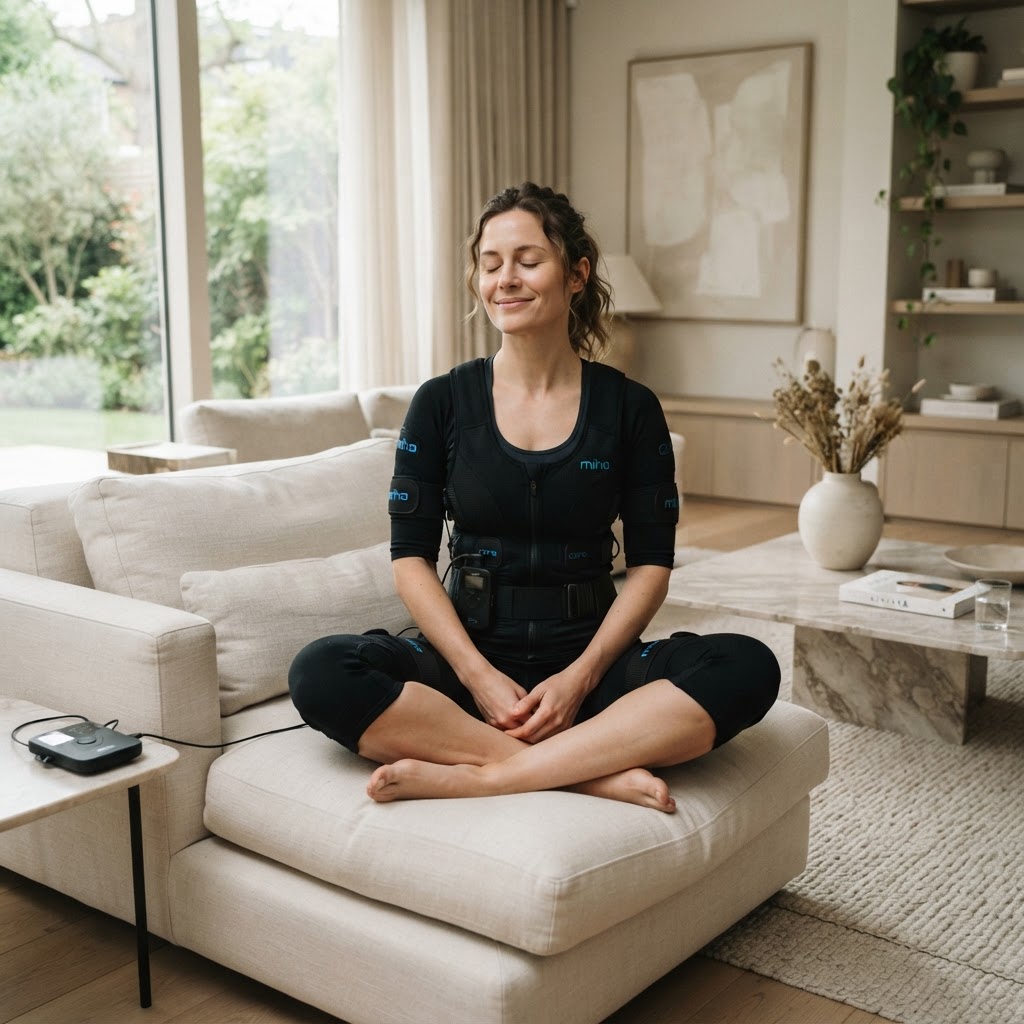
"Does it hurt?" is usually the first question people ask about EMS training. The idea of electrical impulses making your muscles contract sounds, well, shocking. But the reality is very different from what most people imagine. Here's exactly what an EMS session feels like, from someone who's guided hundreds of clients through their first session.
The Short Answer
No, EMS training does not hurt. The vast majority of people describe it as an intense but comfortable sensation — more like a deep, rhythmic muscle massage than anything painful. Your trainer controls the intensity throughout, and you can always ask to adjust it up or down.
What the Sensation Actually Feels Like
The First Few Seconds
When the EMS suit is first turned on, you'll feel a gentle tingling or buzzing sensation on your skin. It's mild — similar to a TENS unit or a mild vibration. Most people are surprised by how gentle it feels at the baseline setting.
During the Workout
As your trainer gradually increases the intensity and you begin moving through exercises (squats, lunges, arm movements, core work), the sensation intensifies into a deep, rhythmic pulsing inside your muscles. You'll feel your muscles contracting powerfully — far more intensely than you could achieve on your own — but the contraction itself feels like a very strong muscle squeeze, not a shock.
Most clients describe it as:
- "Like my muscles are working harder than they ever have"
- "A deep, pulsing squeeze — intense but not sharp"
- "Like a deep tissue massage combined with a workout"
- "Weird at first, then kind of addictive"
After the Session
Immediately after, most people feel a pleasant fatigue in their muscles — similar to post-workout soreness but milder. Many report feeling energized and lighter. The day after your first session, you may experience mild DOMS (delayed onset muscle soreness), similar to starting any new workout.
Why EMS Doesn't Hurt
The Science of the Sensation
EMS uses low-frequency electrical impulses (typically 80-100 Hz) that are specifically calibrated to stimulate motor nerves, not pain receptors. The impulses mimic the natural signals your brain sends to your muscles — they're just stronger and more comprehensive. Your body recognizes the contraction as natural movement, just more intense.
Professional Control
Every EMS-ology session is guided by a certified trainer who monitors your comfort throughout. The intensity is always:
- Gradually increased — never turned up suddenly
- Adjusted to your tolerance — you're in control of the dial
- Personalized to your fitness level — beginners start low and build up
FDA-Cleared Equipment
We use only FDA-cleared EMS devices that meet strict safety standards. The electrical output is carefully regulated and cannot exceed safe levels. The suit is designed for comfort, with padded electrodes that distribute the sensation evenly.
What About People With Low Pain Tolerance?
EMS is actually an excellent choice for people who are sensitive to discomfort. Because:
- You control the intensity — if it ever feels too strong, your trainer dials it down immediately
- There's no impact — no dropping weights, no joint strain, no jarring movements
- The sensation builds gradually — your body adapts as the session progresses
- It's over in 20 minutes — even at higher intensities, the duration is brief
Common Sensation Myths
"It feels like being electrocuted"
Absolutely not. EMS uses very low-frequency currents that stimulate muscles, not pain nerves. The sensation is a deep muscle contraction, not a shock. There's no sharp or stabbing feeling.
"You have to tolerate pain to get results"
Not true. Results come from consistent training at an intensity that challenges your muscles — which is well below any pain threshold. Pushing through pain is counterproductive and unnecessary.
"The stronger the sensation, the better the workout"
There's a point of diminishing returns. Your trainer will find the optimal intensity for your body — strong enough to create deep contractions, comfortable enough that you can focus on your form and movement.
Tips for Your First Session
- Communicate openly — tell your trainer if anything feels too intense. They want you comfortable.
- Start conservative — it's better to finish wishing it was harder than to be overwhelmed.
- Focus on your breathing — steady breathing helps you relax into the sensation.
- Trust the process — the first 2 minutes feel the strangest. By minute 5, most people are fully comfortable.
- Hydrate before and after — proper hydration improves the quality of muscle contractions and reduces post-session soreness.
The Bottom Line
EMS training is intense — but intensity is not the same as pain. The sensation is deep, rhythmic, and powerful, but it's controlled, comfortable, and entirely manageable. Most people are surprised by how quickly they adapt, and many find the sensation genuinely enjoyable. If you've been hesitant to try EMS because of fear of pain, rest assured: you're in good hands, and you're always in control.
Next Article
Can You Lose Weight With EMS Training?
Does EMS training actually help with weight loss? We break down the science, the studies, and what to realistically expect.
Continue ReadingReady to experience EMS training or lymphatic wellness for yourself?