EMS Training vs. Traditional Gym Workouts: Which Is Better?
An honest comparison of EMS training and conventional gym workouts — time, results, muscle activation, and which is right for you.
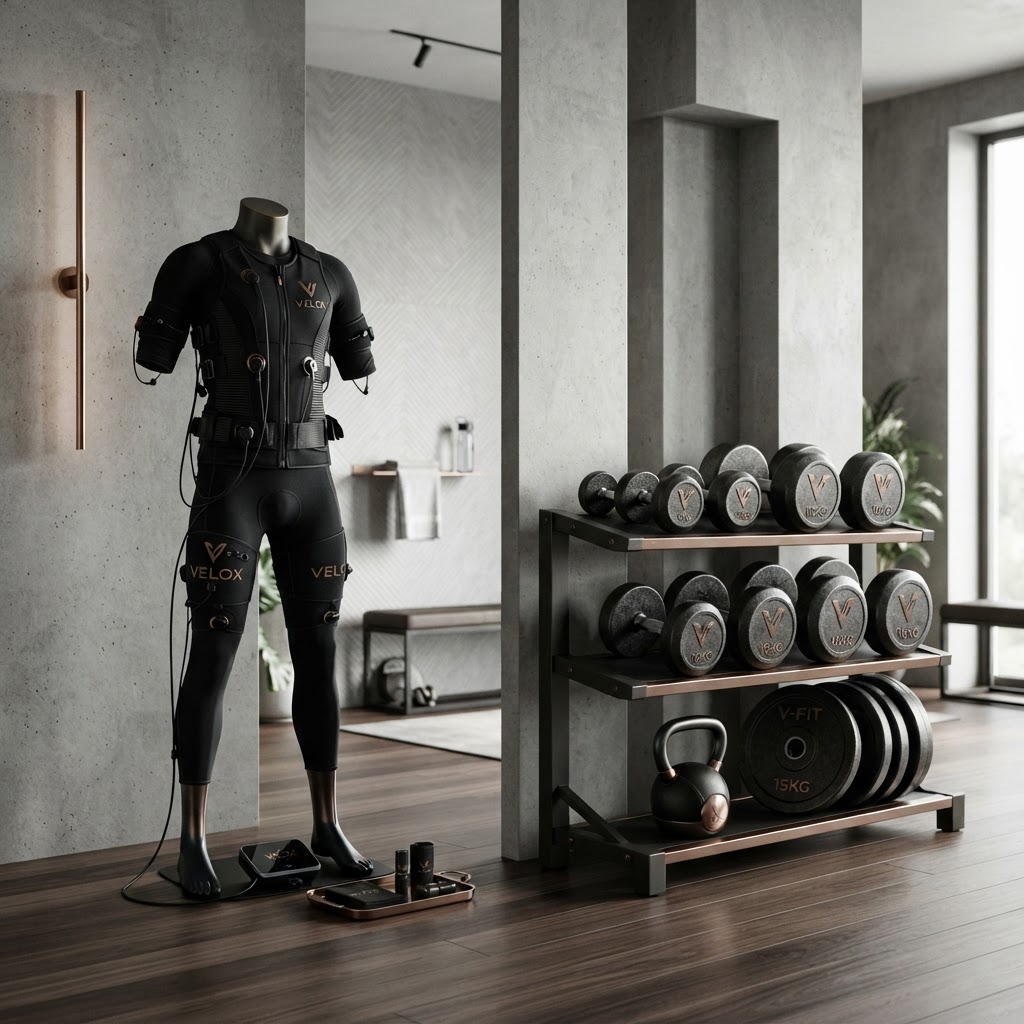
If you're trying to decide between EMS training and a traditional gym routine, you're not alone. It's one of the most debated topics in fitness right now. Both approaches build strength, burn calories, and improve your body — but they do it in very different ways. Here's an honest, science-based comparison to help you choose.
The Fundamental Difference
Traditional gym workouts rely on voluntary muscle contraction — your brain tells your muscles to move weights, and your muscles respond. You typically engage 40-60% of your available muscle fibers during any given exercise.
EMS training uses electrical impulses to stimulate muscle contraction directly, bypassing the nervous system's natural limitations. This engages up to 90% of your muscle fibers simultaneously, including deep stabilizing muscles that are hard to reach with conventional exercises.
Time Investment
Traditional Gym
A typical gym session lasts 60-90 minutes, including warm-up, multiple sets with rest periods, and cool-down. For meaningful results, most people need 3-4 sessions per week — a total of 3-6 hours.
EMS Training
A complete EMS session lasts just 20 minutes, with no warm-up or cool-down needed (the suit does the work). For results, you need 1-2 sessions per week — a total of 20-40 minutes per week.
Winner: EMS — by a wide margin. EMS delivers comparable results in roughly one-third the time commitment.
Muscle Activation
Traditional Gym
Conventional training allows you to isolate specific muscle groups with precision. You can progressively overload by increasing weight, reps, or sets. However, it's difficult to engage deep stabilizing muscles, and most people have muscle imbalances they don't even know about.
EMS Training
EMS activates all major muscle groups simultaneously — agonists and antagonists work together. This creates balanced development and engages the deep core and stabilizing muscles that are nearly impossible to target with traditional exercises. The trade-off is less ability to isolate a single muscle group.
Winner: Tie — EMS wins on total-body activation and balance; traditional training wins on isolation and progressive overload.
Strength Development
A 20-week study comparing EMS to 90-minute resistance training found that traditional resistance training led to greater strength development and fat reduction, while EMS was more effective for weight and BMI reduction. Both methods improved body composition, but they excel in different areas.
If your primary goal is maximum strength (powerlifting, heavy lifting), traditional training remains superior. If your goal is overall body composition, toning, and time efficiency, EMS is highly competitive.
Winner: Traditional for pure strength; EMS for body composition and efficiency.
Joint Impact and Safety
Traditional Gym
Heavy weightlifting places significant mechanical stress on joints, tendons, and ligaments. Poor form or excessive loads can lead to injury. However, with proper technique and progressive loading, traditional training is safe for most people.
EMS Training
EMS is low-impact by design. There's no external weight loading — the resistance comes from your own muscle contractions. This makes it exceptionally joint-friendly and ideal for injury recovery, postpartum fitness, seniors, and anyone with joint concerns.
Winner: EMS — significantly lower joint stress and injury risk.
Convenience and Consistency
Traditional Gym
Requires traveling to a gym, waiting for equipment, and dedicating a large block of time. This is the #1 reason people abandon gym routines — the time and logistics become unsustainable.
EMS Training
With concierge EMS, the trainer comes to your home with all equipment. You need a small clear space and 20 minutes. No commute, no waiting, no gym intimidation. This dramatically improves consistency — the most important factor in any fitness program.
Winner: EMS — the convenience factor is transformative for busy professionals, parents, and anyone who struggles with gym consistency.
Which Is Right for You?
Choose Traditional Gym If:
- Your primary goal is maximum strength or powerlifting
- You enjoy the gym environment and social aspect
- You want to isolate and build specific muscle groups
- You're on a tight budget
- You have plenty of time to dedicate to training
Choose EMS Training If:
- You're time-poor and need maximum results in minimum time
- You want a full-body workout without joint stress
- You prefer one-on-one guidance over self-directed gym sessions
- You're recovering from injury, postpartum, or have joint concerns
- You want the convenience of at-home training
- You struggle with gym consistency
Choose Both If:
Many of our most successful clients combine both — 1-2 EMS sessions per week for deep muscle activation, plus 1-2 traditional sessions or cardio for variety and cardiovascular health. This hybrid approach gives you the best of both worlds.
The Bottom Line
There's no universal "better" option — there's only what's better for you. EMS excels in time efficiency, joint safety, and full-body activation. Traditional training excels in strength development, isolation, and cost. The best workout is the one you'll actually do consistently. For many busy Los Angeles professionals, that's EMS.
Next Article
Does EMS Training Hurt? What a Session Actually Feels Like
Worried EMS training will be painful? Here's exactly what the electrical impulses feel like, and why most people find it surprisingly comfortable.
Continue ReadingReady to experience EMS training or lymphatic wellness for yourself?